After a period of challenges and transition, China’s innovative drug
industry has gained significant momentum over the past two years and entered a
new stage of high-quality development.
In
2025, 77 Class 1 innovative drugs were approved in China, setting a new record.
Upfront payments from overseas licensing deals for China-originated innovative
drugs exceeded USD 7 billion, representing year-on-year growth of more than
70%. As China continues to see strong domestic R&D output, its innovation
assets are also moving rapidly onto the global stage, with China-originated
innovation becoming an increasingly important part of the global R&D
landscape.
As a key participant and enabler in the
innovative drug ecosystem, Tigermed has grown alongside the industry for more
than two decades. Through continued investment in integrated services, global
operations, and digital applications, the company has achieved steady business
growth and earned the trust of clients and partners.
As part of Tigermed’s strategic
efforts to further strengthen its management team, and accelerate its global
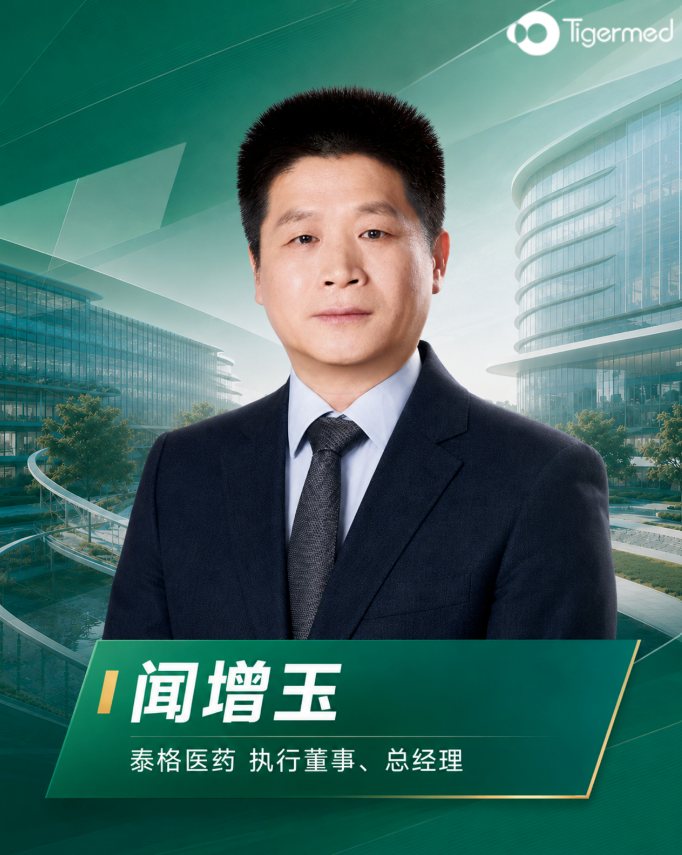
development, Mr. Zengyu Wen was recently appointed General Manager of Tigermed.
Following his appointment, we spoke with Mr. Wen about the new opportunities
and evolving expectations for CROs amid the globalization of China’s innovative
drugs, as well as Tigermed’s future strategy and vision.
Mr. Wen has more than 20 years of
experience in R&D services and corporate management. Since joining Tigermed
in 2010, he has led the Biometrics Business Unit, International Business Unit,
and Global Innovative Drug CRO Business. With strategic vision and strong
leadership, he has driven robust business growth and expanded Tigermed’s
service footprint across Asia-Pacific, North America, Europe, Africa, Latin
America, and other regions, helping the company move onto a broader global
stage.
Q1: In 2025,
China’s innovative drugs are accelerating their global expansion. How do you
view this trend?
Zengyu Wen: Over the past year, we have clearly seen
China’s innovative drug sector accelerate, with stronger global engagement and
more visible progress across the industry. The number of approved innovative
drugs continues to rise, overseas licensing deals for China-originated assets
keep reaching new highs, and clinical trial data generated in China is
receiving increasing attention and validation in global development programs.
China’s innovative drug industry is becoming more deeply integrated into the
global innovation ecosystem. This is not simply about breakthroughs in
individual products; it reflects progress across multiple areas, including
regulation, quality systems, R&D capabilities, and international
collaboration.
We are also seeing many multinational pharmaceutical
companies increasing their investment in China and establishing innovation and
R&D centers here. They no longer see China only as an important commercial
market. Increasingly, they are incorporating China into their global R&D
strategies at an earlier stage. This signals a shift in China’s role within the
global pharmaceutical innovation system.
From my perspective as someone who has witnessed this
evolution firsthand, I believe this trend is still at an early stage.
Q2: As the global
policy environment becomes increasingly uncertain, what challenges do clinical
CROs face, and how is Tigermed positioned to respond?
Zengyu Wen: Indeed, the global
policy environment has grown increasingly uncertain over the past few years.
Challenges such as cross-regional applicability of clinical data, coordination
of international multicenter trials, and complex local compliance requirements
are placing higher demands on global R&D. In such a context, the more
complex the environment, the more critical it becomes for a CRO to maintain a strong
global operational network, reliable local delivery capabilities, and
consistent compliance and quality systems.
Over the past several years, Tigermed has been
proactively expanding its global footprint and strengthening integrated service
capabilities. No matter where our clients operate or which regulatory
environment they face, we deliver consistent, compliant, and high-quality
clinical R&D support. When policies in a specific region change, our teams
can respond swiftly to minimize any impact on client programs.
For example, in terms of potential cross-border R&D
challenges between China and the U.S., our long-standing presence in the U.S.
allows us to support clients whether they are bringing programs into China or
advancing projects in the U.S. By leveraging local compliance expertise
alongside a unified quality system, we can coordinate efficiently across
regions and ensure timely project execution.
Therefore, Tigermed’s
competitive advantage lies in the combination of deep expertise in China and
global excellence. Our extensive experience with international multicenter
projects supports Chinese pharmaceutical companies in their global expansion,
while our robust network and operational capabilities in China enable
international companies to enter the Chinese market more effectively. This dual
capability is a key differentiator for Tigermed in the global CRO landscape.
Q3: How does Tigermed’s global footprint support
the R&D needs of innovative pharmaceutical companies?
Zengyu Wen:
Our global
expansion has always been driven by clients’ real R&D needs, as well as the
practical experience we have accumulated through global projects over the
years.
Today,
Tigermed has more than 11,000 employees across 43 countries. Behind these
numbers is our experience in more than 160 international multicenter clinical
trial projects, as well as over 240 ongoing overseas clinical trial projects.
These figures reflect not only the scale of our global presence, but also the
collective effort of our teams around the world.
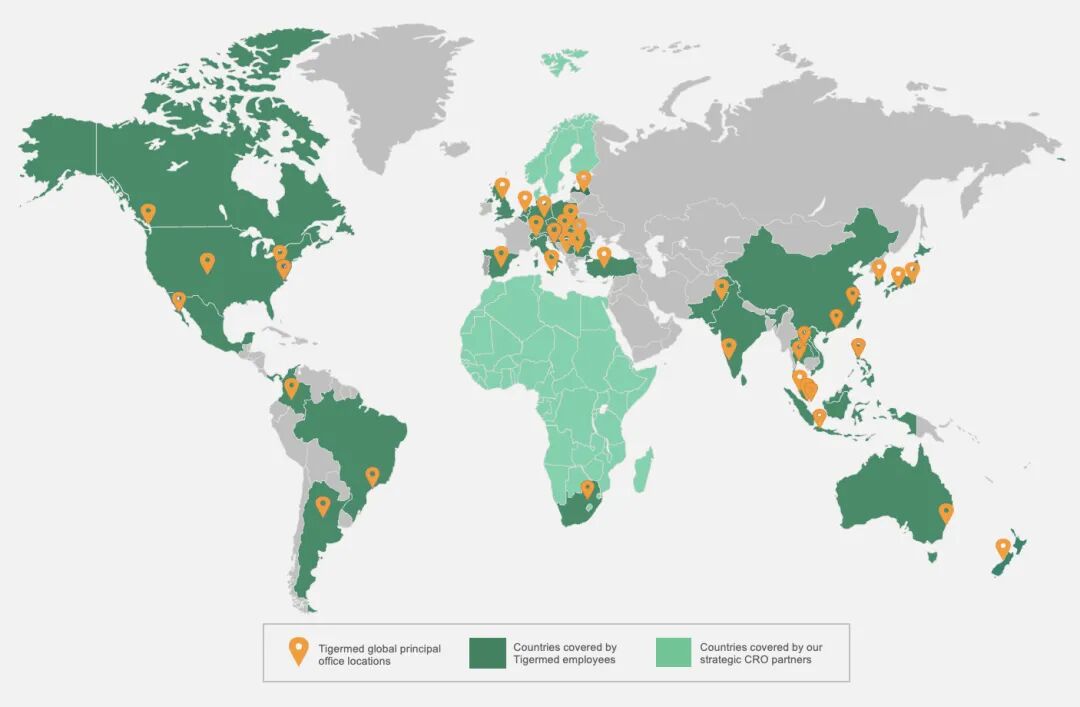
Tigermed’s Global Footprint as of
June 2026
The United
States is currently Tigermed’s largest operating region outside China, with a
team of more than 1,000 people and end-to-end capabilities spanning laboratory
services, regulatory support, and clinical development. In Europe, our teams
cover more than 20 countries, enabling us to meet clients’ diverse R&D
needs. In Japan, our acquisition of Micron, a CRO specializing in imaging
analysis, has further strengthened our client coverage. In Korea, our
subsidiary DreamCIS has become the country’s largest clinical CRO. We recently
established a subsidiary in New Zealand to further expand our clinical
operations and delivery capabilities in Asia-Pacific. In Australia, we are a
leading CRO partner supporting Chinese pharmaceutical companies in conducting clinical
research. In emerging markets such as Southeast Asia and South America, we have
also built mature local teams and operating systems through years of
engagement.
For us,
globalization is not simply about sending teams overseas. It is about building
local teams that are deeply rooted in their markets and integrated into local
clinical research environments. By connecting local execution with global
coordination, we aim to create a two-way bridge that supports both Chinese
companies going global and international companies entering China. This remains
a key strategic direction for Tigermed.
Q4: Why has Tigermed continued to invest in
integrated service capabilities?
Zengyu Wen:
Clinical R&D is never a single-step process. It is a complex ecosystem. For
a new drug to move from the laboratory to patients, it must pass through
multiple stages, and every stage matters. For sponsors, the challenge is not
only to find the right service providers, but also to reduce information gaps
across different functions and stages, while maintaining alignment in timelines
and quality standards. This is where Tigermed’s integrated platform creates
value.
To address the R&D needs of innovative drugs and
medical devices, we have developed three integrated service platforms. The
integrated drug R&D service platform covers the full lifecycle of drug
development, including preclinical research, laboratory services, clinical
development, regulatory affairs, and post-marketing services. The integrated
clinical site service platform focuses on site management, institution
services, and participant management, with an emphasis on improving execution
efficiency at clinical research sites. The integrated medical device R&D
service platform covers key stages from R&D and testing to clinical
development, registration, and post-market services.
These three platforms operate
independently while working in close coordination. Together, they help clients
improve R&D collaboration efficiency while ensuring consistency in quality.
For Tigermed, the value of integration lies in reducing information gaps
between different stages and functions, and ensuring that each transition is
managed in a timely, smooth, and reliable manner.
Q5: How will AI and digitalization shape the future
of clinical development?
Zengyu Wen: For AI, the real value lies not in the concept
itself, but in whether it can be embedded into actual workflows and solve
practical problems. This is particularly important in clinical R&D
services. AI and digital tools must operate within a compliant and
quality-controlled framework, while helping improve project efficiency, reduce
repetitive workload, and provide more stable and predictable support for
execution and quality management.
Based on this approach, digitalization has become one
of Tigermed’s core strategies. In 2025, our self-developed TAYA AI large model
platform was officially commercialized. We also launched products such as an AI
translation platform and an AI writing platform. We are now building an AI
product matrix that covers the full clinical trial workflow, gradually
embedding intelligent capabilities into professional areas such as medical
writing, regulatory submissions, biostatistics, and pharmacovigilance.
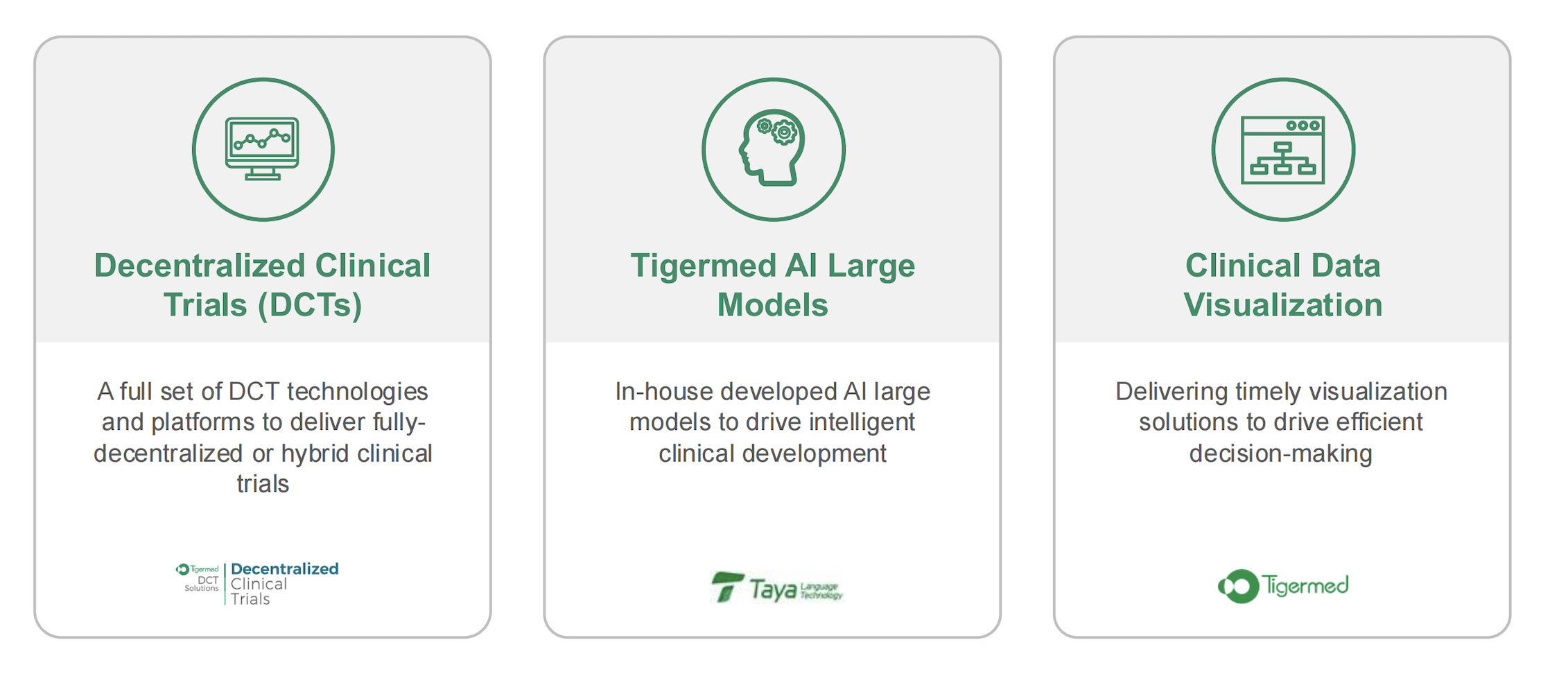
Tigermed AI and Digital
Enablement Platform
For example, in medical language services, our TAYA team
has developed an intelligent medical language service platform based on AI
large models. The platform covers the full process from manuscript analysis,
online editing, and quality assessment to terminology and corpus management, as
well as compliance control. In clinical operations, we are also advancing a
range of tools, including digital follow-up, decentralized clinical trial
platforms, participant management systems, and risk-based quality management.
For us, AI must be more than a slogan. It needs to be
practical, applied, validated, and continuously improved in real projects. This
is why Tigermed will continue to invest in digital and intelligent
capabilities.
Q6: Tigermed has recently entered into strategic
collaborations with a range of partners, including local pharmaceutical
companies, AI-driven drug discovery companies, and multinational pharma. What
do these collaborations tell us about the changing needs of clinical R&D
services?
Zengyu Wen: Innovative drug R&D increasingly
relies on cross-regional collaboration, technology platform support, and
long-term partnerships. The relationship between CROs and clients is evolving
in the same direction. More innovative companies are looking for services that
are more continuous, more integrated, and more global in perspective.
Since 2026, we have entered into multidimensional
strategic collaborations with a number of clients. These partnerships reflect
the evolving needs of the market.
Earlier this year, we signed a strategic
collaboration with a leading multinational pharmaceutical company for
early-stage clinical development in China and participated in the strategic
planning of its global early-stage clinical research. This reflects growing
international recognition of Tigermed’s integrated platform and shows that
Chinese clinical CROs are becoming more deeply involved in the global R&D
system.
More recently, we also entered into a comprehensive
collaboration with 3SBio covering innovative drug R&D, clinical services,
industrial investment, and other areas. This reflects the growing need among
local innovative pharmaceutical companies for long-term R&D collaboration
capabilities.
At the same time, our collaboration with Insilico
Medicine is helping connect AI-driven drug discovery with clinical development
scenarios. The collaboration between TAYA Technology and Alibaba Cloud focuses
on large model operations and organizational efficiency, accelerating the
iteration of AI applications in clinical R&D.
Together, these collaborations reflect an important shift
in client needs. CRO partners are expected to go beyond project execution and
provide integrated, globally coordinated support across the R&D process.
This is the direction in which Tigermed is continuing to strengthen its
capabilities.
Q7: How do you see the current state
of global pharmaceutical innovation, and what gives Tigermed confidence in the
future?
Zengyu Wen: Global pharmaceutical innovation is at a critical
stage of development. Population aging and the rising burden of chronic
diseases continue to drive demand, while emerging technologies and innovative
therapies are creating new opportunities for international collaboration. We are
confident in both the industry’s long-term prospects and Tigermed’s future
development.
This
confidence is supported by the continued growth of R&D demand. In 2025,
Tigermed’s net new orders reached RMB 10.158 billion, up 20.6% year on year,
while total backlog reached RMB 18.202 billion, up 15.4% year on year. The
continued growth of our order base provides a solid foundation for future
business development.
Beyond the numbers, what matters more is the
long-term industry experience behind them. Since its founding in 2004, Tigermed
has provided R&D services for 61% of China’s approved Class 1 innovative
drugs. In 2025 alone, we supported 49 Chinese Class 1 innovative drugs that
received approval, accounting for 65% of all Class 1 innovative drug approvals
in China that year.
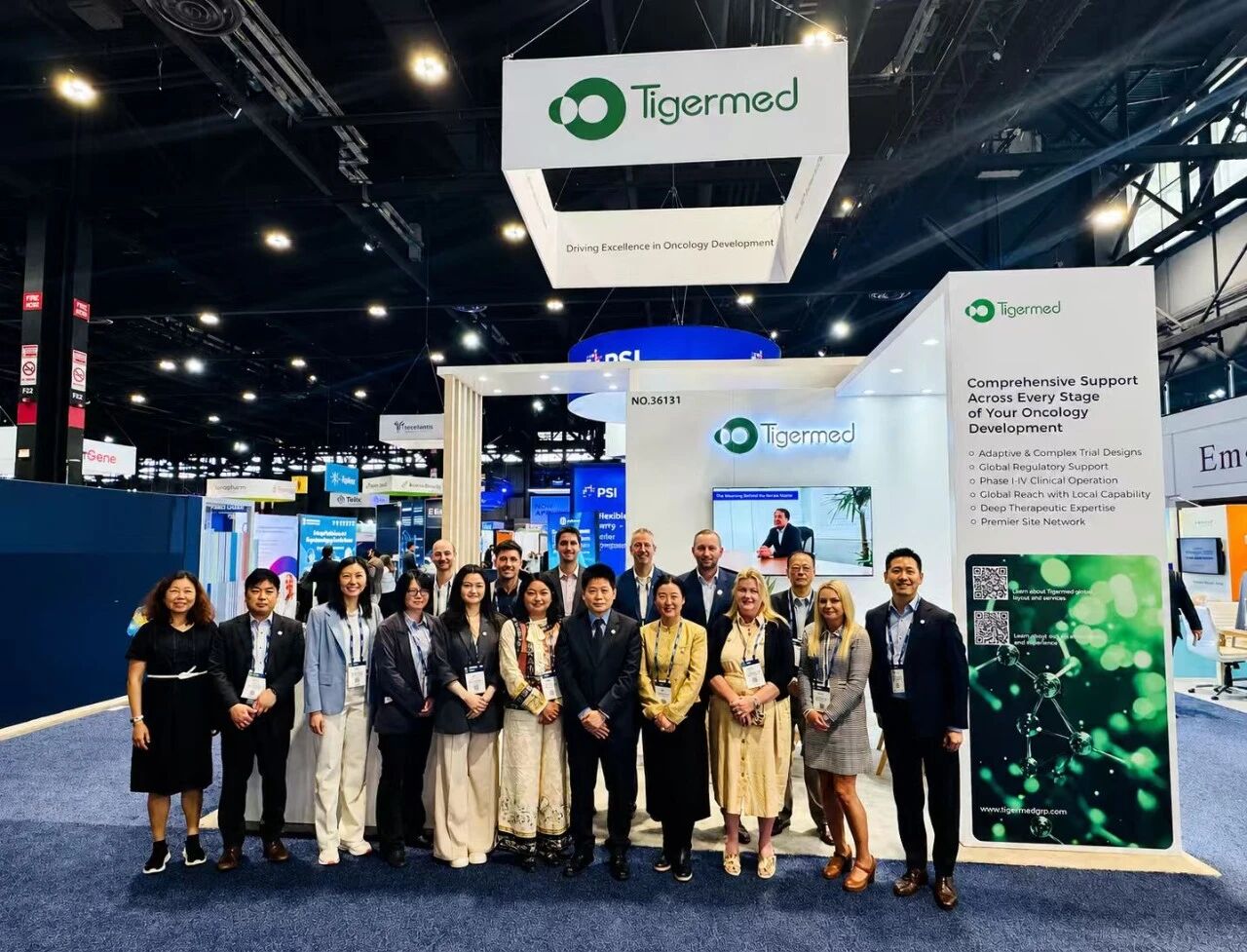
At the 2026 ASCO Annual Meeting, which concluded
recently, we engaged with dozens of overseas innovative pharmaceutical
companies. These discussions gave us a strong sense of international companies’
growing interest in China’s clinical research capabilities, as well as the
global market’s expectations for China’s resources and expertise.
For more than two decades, Tigermed has been deeply
engaged in China’s innovative R&D ecosystem. This has given us a strong
understanding of China’s clinical resources, regulatory environment, research
site network, and project execution system. Building on this foundation, we are
well positioned to help global pharmaceutical companies incorporate China into
their global R&D plans more efficiently, while also supporting Chinese
innovative pharmaceutical companies in expanding globally and advancing
international development.
This is both a capability Tigermed has
built over time and a responsibility we will continue to carry forward.