Selecting a preclinical contract research
organization (CRO) is one of the most consequential decisions
in drug development. Incomplete or weak nonclinical data can delay
Investigational New Drug (IND) review and first-in-human planning. At Tigermed,
we built our preclinical network to address this challenge directly by
delivering integrated, science-driven, and regulatory-ready data across
multiple regions and disciplines.
What an
IND-Enabling Preclinical Program Requires
For a US IND application, the Food and Drug
Administration (FDA) evaluates whether pharmacological and toxicological data
support the safety of first-in-human trials. The nonclinical package should
include pharmacology, toxicology, and any special studies relevant to the
product class. The FDA also expects information from studies examining drug
behavior in animals, including toxicology and absorption, distribution,
metabolism, and excretion (ADME) studies, where appropriate.
The International Council for Harmonisation
(ICH) M3(R2) guideline provides harmonized guidance on the timing and scope of
nonclinical safety studies for clinical trials. It discusses study types,
duration, and their relationship to clinical development phases, aiming to
facilitate timely trials while reducing unnecessary animal use.
Good Laboratory Practice (GLP) is the
quality system governing the planning, execution, monitoring, recording,
reporting, and archiving of nonclinical safety studies. Studies conducted in
compliance with GLP are essential for regulatory acceptance.
Tigermed’s preclinical service portfolio
covers six core areas that bridge drug discovery and IND-enabling studies:
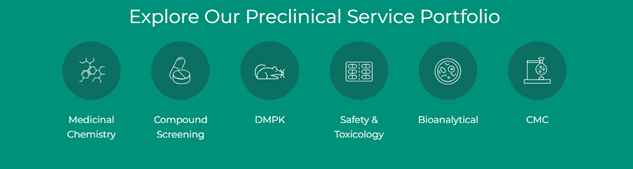
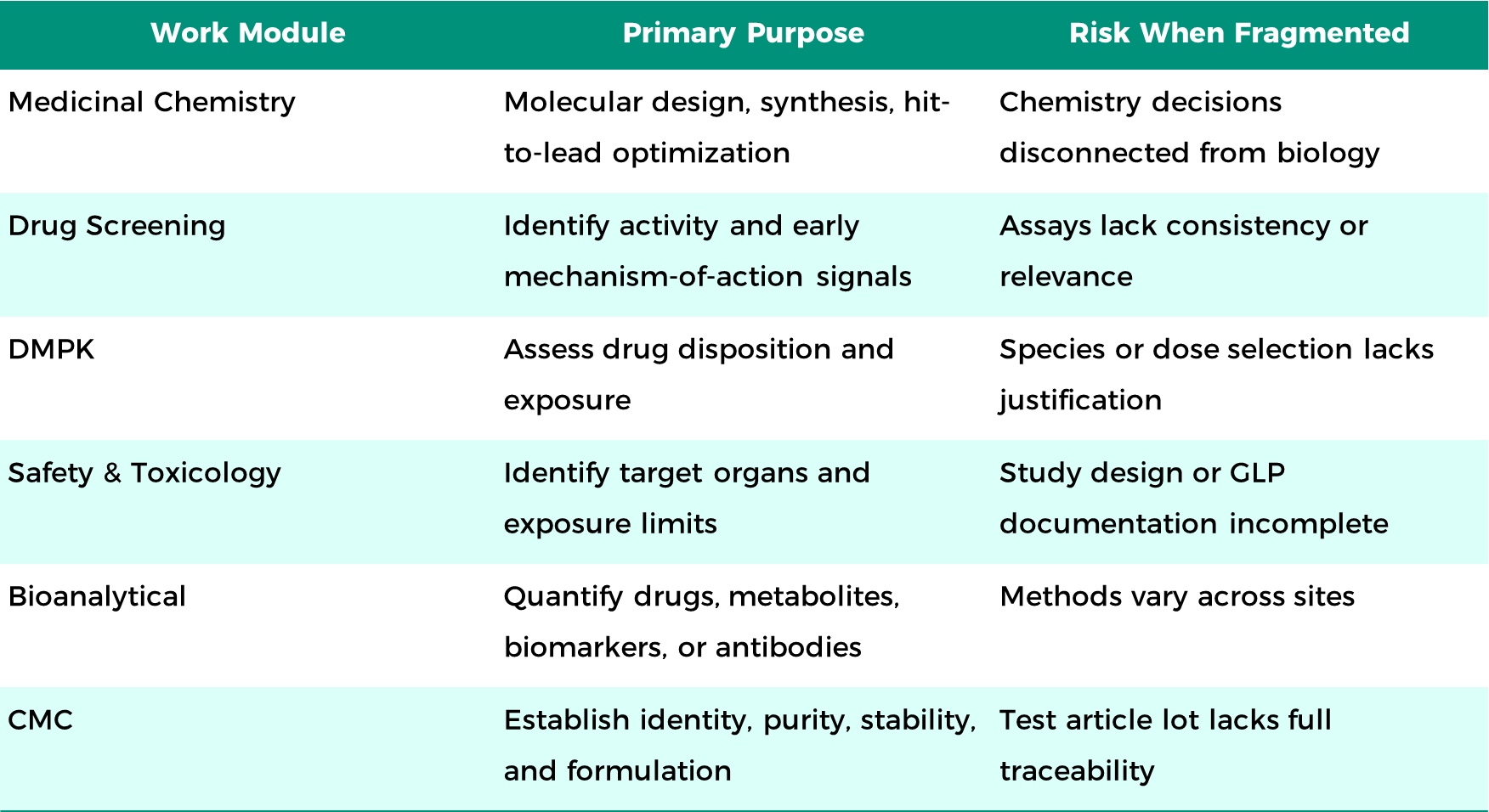
This scope helps identify study gaps before
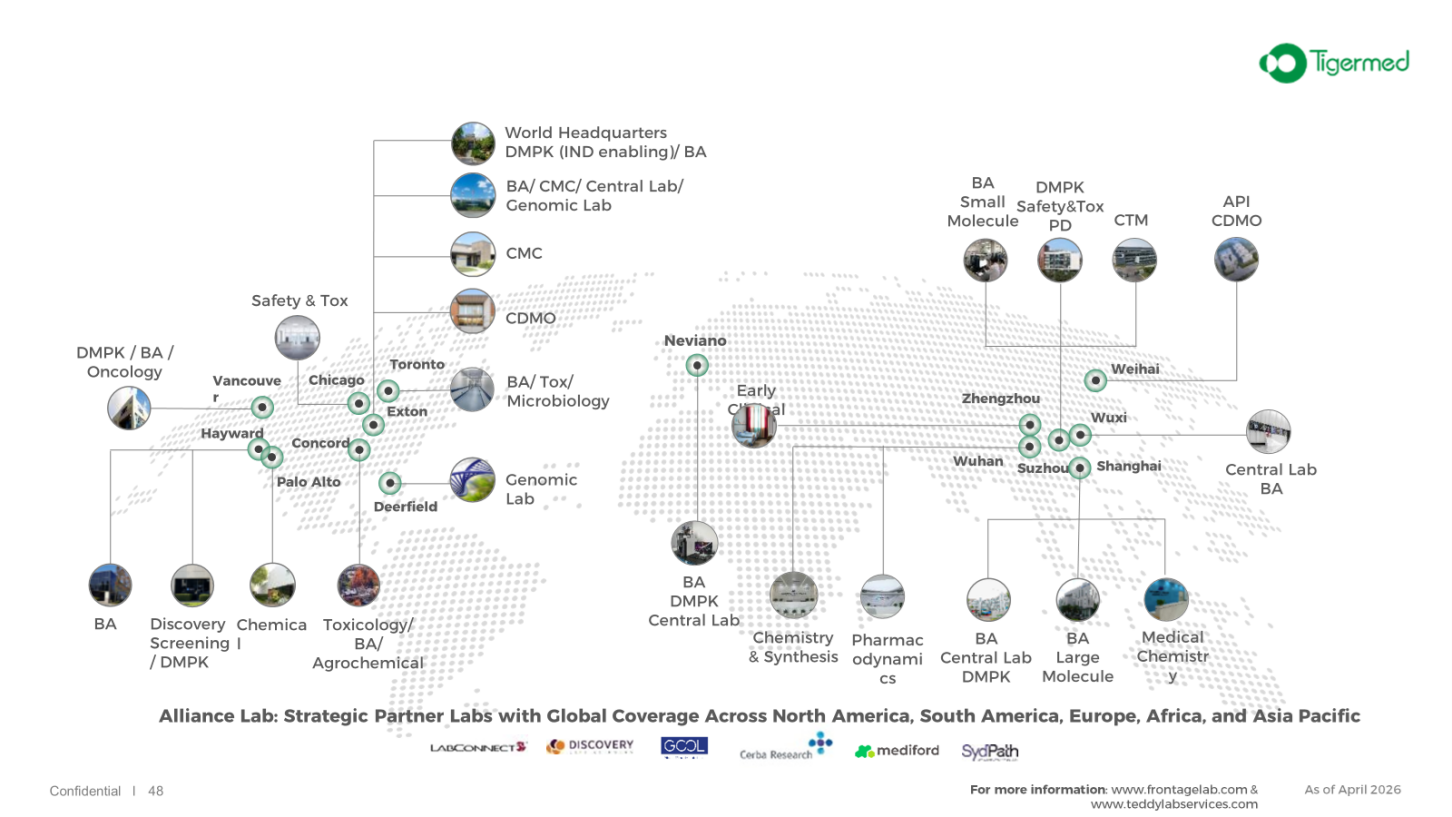
critical studies begin. Tigermed’s platform covers drug discovery through IND-enabling
packages, with laboratories in the US, China, and Europe.
Why
Cross-Regional Lab Networks Matter
1.
Regulatory planning begins before key studies start
Global programs may target multiple
regions. Early planning aligns study designs, analytical plans, and reports
with intended submission pathways.
The Organisation for Economic Co-operation
and Development (OECD) established the Mutual Acceptance of Data (MAD) system.
Under MAD, data generated in a member country according to OECD Test Guidelines
and GLP principles is generally accepted in other member countries for
assessment purposes. This system reduces duplicative testing and can save
costs. However, applicability depends on specific programs and remains subject
to national regulatory requirements.
Tigermed’s laboratories work within aligned
quality frameworks and use harmonized procedures where appropriate. SOPs (standard operating
procedures) are
controlled documents that govern repeatable activities. Unified SOPs help
different laboratories produce comparable work while retaining local teams’
expertise in regional regulatory requirements.
2.
Methods remain comparable across sites
A program may conduct in vivo pharmacology
services at one site, bioanalysis at another, and GLP toxicology at a third.
Without controlled method transfer, the same analyte may be assessed using
different calibration ranges, biological matrices, stability conditions, or
acceptance criteria.
A unified method lifecycle maintains study
continuity:
Feasibility → Method confirmation or
validation → Controlled method transfer → Sample analysis → Cross-site review →
Archiving
Method transfer plans require clear
responsibilities, acceptance criteria, reference materials, and documentation.
When multiple laboratories support the same regulatory submission,
demonstrating method comparability may become a critical scientific and regulatory
consideration.
Tigermed’s DMPK capabilities cover early
ADME screening and extend to in vivo pharmacokinetics, metabolite profiling,
tissue distribution, and toxicokinetic studies. These data inform candidate
selection and safety interpretation.
3. Test
article and sample logistics remain traceable
Cross-border programs introduce risks: customs
clearance, temperature control, biological sample stability, chain of custody,
and transit timing. These risks are particularly acute when animal studies and
analytical testing occur in different regions.
A mature lab network documents the full
lifecycle:
Manufacturing → Release → Shipment →
Receipt → Storage → Formulation → Dosing → Collection → Analysis → Retention →
Archiving
Each handoff requires clear accountability.
Shipping records, temperature data, sample reconciliation, and storage
documentation must link to study files. Backup instruments and escalation
procedures help protect fixed study timelines.
CMC planning is integral to this process.
Tigermed’s CMC services include formulation development, finished product
quality research, clinical trial material manufacturing, stability studies,
analytical method development, and regulatory submission support across
multiple dosage forms.
4.
Parallel activities follow unified governance
With clear accountability, method
development, formulation analysis, dose-range finding, bioanalysis, and
regulatory planning can proceed in parallel. Without unified governance, these
activities may proceed on conflicting assumptions.
Effective governance includes a unified
project plan, designated responsible parties, shared change control, and
documented escalation procedures. Cross-functional reviews link drug exposure
data, formulation performance, animal study results, and clinical dose
assumptions before key studies begin.
5.
Inspection readiness requires site-level verification
Due diligence on a CRO must reach the
specific facility level. Group-level certifications provide reference points
but cannot replace review of the executing site’s GLP scope, inspection
history, staffing, computerized systems, data controls, and archives.
Laboratories within Tigermed’s affiliated
network have experience supporting inspections including FDA, NMPA, WHO, and
the US EPA. Tigermed also has extensive experience in GMP, GLP, and GCP, and operates
AAALAC-accredited animal facilities.
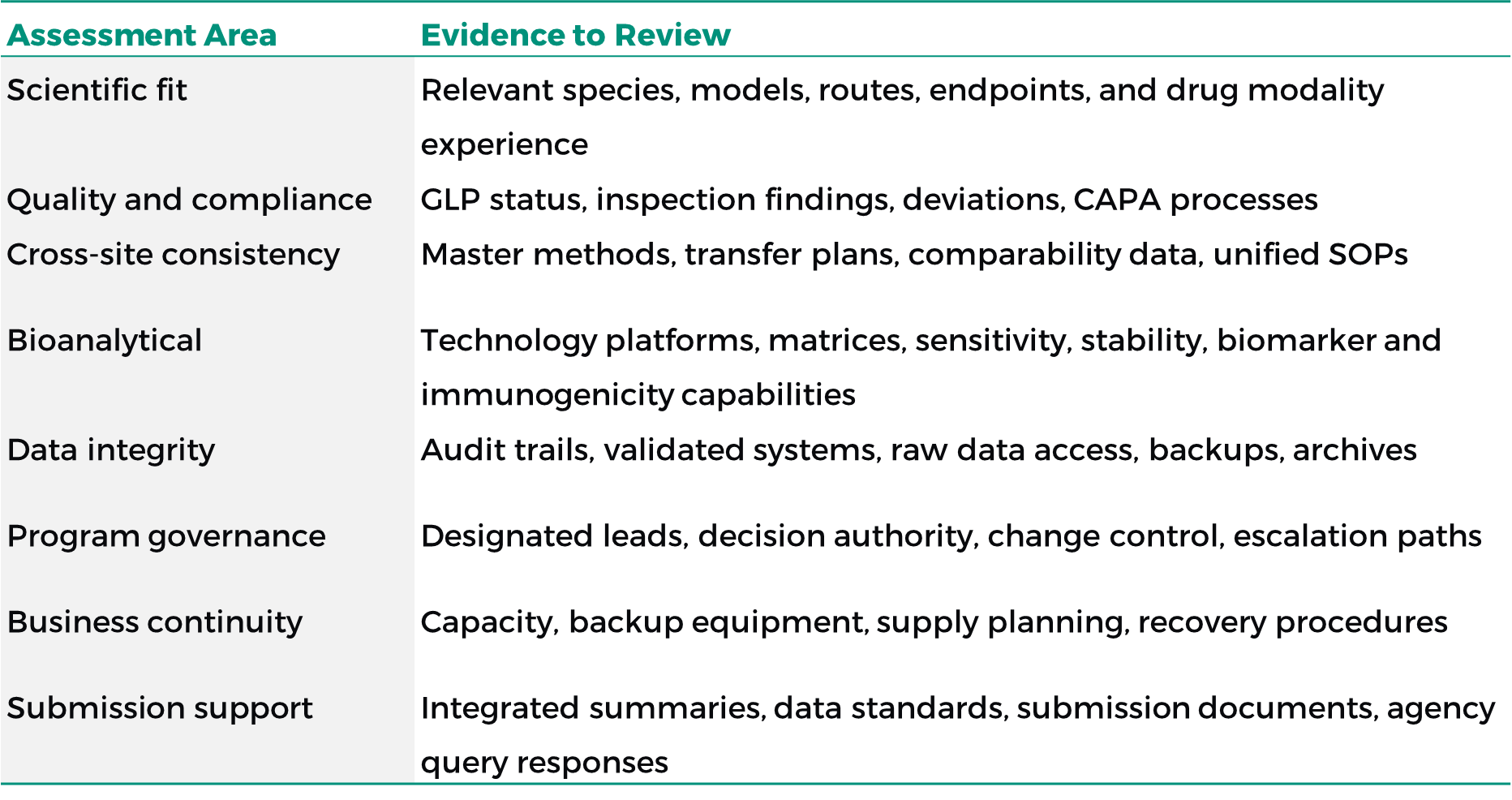
A
Practical Preclinical CRO Selection Scorecard
How
Tigermed Supports an Integrated Preclinical Development Path
Tigermed combines cross-regional laboratory
capabilities with an integrated portfolio of services spanning drug discovery,
drug metabolism and pharmacokinetics, safety and toxicology, bioanalysis,
chemistry, manufacturing and quality control, and early clinical development.
This breadth of services enables sponsors to coordinate interdependent
workstreams within a unified project framework, without having to manage
multiple fragmented service providers.
Tigermed provides practical support for
complex and multi-regional programs.
In drug discovery and preclinical research, Tigermed has:
· More than 2,200 employees
· 200,000 square meters of laboratory and R&D facilities
· Experience with more than 200 FDA inspections
· Experience with more than 150 NMPA inspections
· Supported the market approval of more than 200 new drugs
· Conducted more than 1,000 CMC/CDMO projects
· Evaluated more than 30,000 compounds
· Completed more than 10,000 nonclinical studies
· Supported more
than 500 IND applications
· Supported more
than 250 early-phase clinical studies
Tigermed also meets the highest global
standards and accreditation requirements:
· A strong inspection track record with regulatory authorities,
including the US FDA, NMPA, WHO, and the US EPA
· Extensive experience in GMP, GLP, and GCP
· Animal research facilities accredited by AAALAC International
For sponsors preparing IND submissions,
these capabilities provide tangible advantages: pharmacology, drug exposure,
toxicology, bioanalytical, formulation, and manufacturing data can be reviewed
collectively within a single, coordinated development pathway. The resulting
evidence package offers greater traceability, clearer project-level
accountability, and fewer handoff points across scientific disciplines and
geographic regions.
Recent Expansion of Tigermed’s Preclinical and Central
Laboratory Capabilities
In March 2026, Tigermed completed a resource integration
within its laboratory services business, as Frontage Laboratories strategically
acquired Teddy Clinical Research Laboratory (“TeddyLab”), further strengthening
Tigermed’s laboratory network in China and globally.
According to publicly available
information, Frontage Laboratories has established bioanalytical, formulation
development, and preclinical safety centers across China, the US, and Europe,
and has passed more than 350 inspections by regulatory authorities such as the
NMPA and FDA, including more than 200 FDA inspections. TeddyLab has supported more than
1,500 clinical trials across multiple therapeutic areas and provided laboratory
services in support of the development or regulatory submissions of more than
50 approved drugs. Its central
laboratory has obtained CAP accreditation and CLIA certification, supporting
laboratory testing under internationally recognized quality and regulatory
frameworks.
This integration has further enhanced
Tigermed’s capabilities in preclinical research, central laboratory services,
and multi-regional project coordination.
Cross-regional preclinical CRO services
can help reduce
execution and regulatory risk when laboratories share scientific governance,
quality systems, method controls, and data standards. Supplier selection should
still verify evidence at the specific site level:
relevant models, appropriate GLP compliance, reliable bioanalytical
capabilities, transparent data ownership, inspection readiness, and credible
contingency planning.
References
l U.S. Food and Drug
Administration, IND Applications for Clinical
Investigations: Pharmacology and Toxicology (PT) Information
l U.S. Department of
Health and Human Services, Food and Drug Administration, Center for Drug
Evaluation and Research (CDER), Center for Biologics Evaluation and Research
(CBER), M3(R2) Nonclinical Safety Studies
for the Conduct of Human Clinical Trials and Marketing Authorization for
Pharmaceuticals
l Organisation for
Economic Co-operation and Development, The Mutual Acceptance of Data (MAD)
System